How to paint the furs with oil painting?
TECHNICAL ADVICEBack
A hair is almost nothing. And yet....fine, soft, rough, coarse, short, long, curly or smooth, there are so many differences. Add to this a considerable number of colors, depending on the animal and species, and changes in tone when exposed to light, and the combinations are incalculable. A little nothing for a great whole, and a real treat for the painter.
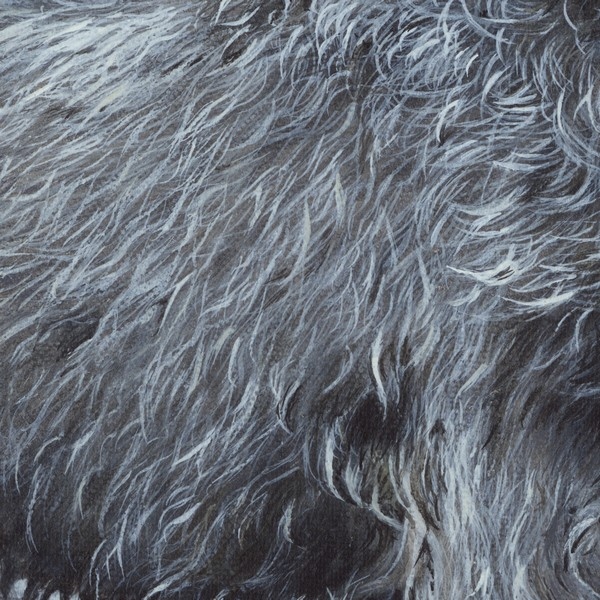
How to respect the direction of the hair and the movement of the fur?
It's essential to respect the direction of the bristles. I use extra-fine brushes, number 0 or 1. When I can't find a brush fine enough, I simply take scissors and remove the superfluous hairs. Sometimes, just a few hairs remain.
Using medium, I liquefy the oil to obtain a consistency suited to this type of brush. The resulting flexibility enables me to make very long bristles oriented in the direction I want.
How to give the impression of suppleness or rigidity to the fur?
Simply change brushes to give the desired direction to the bristles. With a mesh brush, you can make the bristles more flexible by choosing the inclination you wish to give them. This technique is often used on dry surfaces. A short, fine brush produces short, stiff bristles. Working in the cooler* is then perfectly possible for a good blend of colors.
* Working in the fresh: Working on a layer of paint that is not yet dry.
Texture
To create texture effects on fur, you can alternate layers of dark paint and layers of light paint. Using old, trimmed, and modified brushes is, in my opinion, essential for achieving certain effects. It’s up to everyone to experiment and find their own "secret recipe"!
Coat markings
Everything happens at the edges of the markings. It is at this precise spot that the blending of colors must be at its most accurate.
Giving thickness to fur by layering
To achieve a beautiful fur, there is nothing like layering a significant number of paint coats in the different tones of the coat's colors, moving from the darkest to the lightest. Alternating short hairs with long hairs is also a very good way to provide a sense of exuberance.